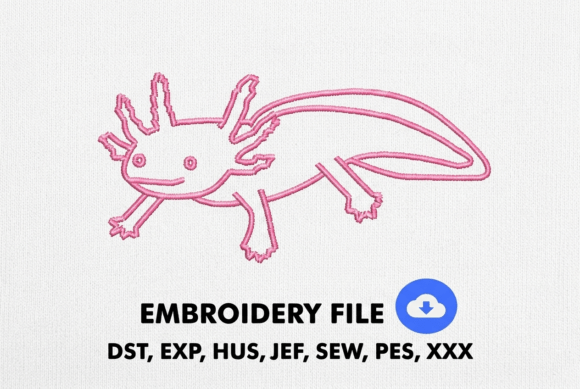
Axolotl Lineart Embroidery Design Review
As a professional embroidery designer specializing in commercial merchandise, I approach every new machine embroidery design with a critical eye toward production viability and brand application. When evaluating the Axolotl Lineart Embroidery Design for small business use, my primary focus is not just on its aesthetic appeal, but on how it translates from a digital file to a tangible asset that drives sales and reinforces identity. This review breaks down the technical performance and commercial potential of this minimalist kawaii motif for shops, creators, and apparel decorators.
First Impressions: Professional Minimalism Meets Kawaii Charm
Upon loading the embroidery file, the immediate impression is one of clean, intentional simplicity. While categorized under Reptiles in some databases, the axolotl occupies a unique niche that bridges aquatic interest and modern kawaii culture. For a business owner, this distinction matters. The line art style suggests a contemporary, approachable brand voice rather than a juvenile or overly cartoonish tone. It feels premium because of its restraint; there is no unnecessary fill stitching to muddy the details at smaller sizes.
The design reads as friendly yet polished, making it suitable for businesses that want to appear handmade and authentic without sacrificing professionalism. Whether you are running a creative studio, a boutique bakery, or an Etsy shop, this aesthetic signals a curated, thoughtful brand identity. It avoids the cluttered look of amateur digitizing, which is crucial when using the design for high-value items like custom apparel or branded packaging accents.
Commercial Viability for Small Business Merchandise
In real-world production scenarios, the Axolotl Lineart Embroidery Design demonstrates significant versatility. Its linear construction makes it an ideal candidate for various small business merch applications where speed and clarity are paramount.
- Pocket Placement and Chest Logos: As described in the product notes, this design is optimized for pocket embroidery. For cafes and florists, placing this on the left chest of staff uniforms creates a subtle, recognizable mark that doesn't overpower the garment. The open line work allows the fabric color to show through, reducing stitch count and keeping the shirt lightweight and breathable for employees.
- Embroidered Patches: Because line art relies on outline definition, it scales exceptionally well for patches. You can produce these as standalone assets for sale or as add-ons for tote bags and jackets. The minimalist nature ensures the design remains legible even when reduced to a 2-inch patch size.
- Tote Bag Design and Apron Embroidery: For makers markets and craft businesses, this design adds instant value to blank goods. On canvas totes or denim aprons, the single-needle aesthetic mimics hand-drawn illustration, enhancing the perceived value of the handmade product.
- Baby Bodysuits and Beanies: The "quick stitch" nature mentioned in the description is a massive advantage for high-volume baby wear production. Less time under the needle means higher profit margins per unit while maintaining a soft hand-feel essential for infant clothing.
Technical Considerations and Production Limitations
While versatile, the Axolotl Lineart Embroidery Design requires specific attention to detail during setup. Line art is unforgiving; unlike satin columns or fills, there is nowhere to hide registration errors or tension issues.
Fabric Texture and Stabilizer Selection
The success of this digital embroidery file depends heavily on your substrate. On smooth fabrics like poplin or twill, the lines will be crisp. However, on textured fabrics like linen or pique knit, the running stitches may get lost in the weave. In these cases, you must adjust your stabilizer strategy. A tear-away might not suffice; consider a cut-away or a water-soluble topping to keep the line art sitting on top of the texture. Always test on the actual fabric texture intended for the final run, as scrap fabric often behaves differently than finished garments.
Cap Embroidery and Curved Surfaces
If applying this to caps, exercise caution. Line art designed for flat hoops does not always translate directly to curved cap fronts without distortion. You may need to verify if the file includes cap-specific compensation. If not, the vertical lines of the axolotl’s gills could pull inward. For cap embroidery, always run a sew-out on the exact cap style before committing to bulk production.
Size Reduction and Detail Integrity
While perfect for pockets, pushing this design too small can cause thread breaks or illegible features. Before resizing below the recommended dimensions, check the spacing between parallel lines. If the lines merge during stitching, the design loses its charm. Maintain adequate clearance to ensure the finished product looks deliberate, not cramped.
Impact on Brand Identity and Customer Trust
Using a cohesive design like the Axolotl Lineart across multiple touchpoints builds visual consistency. When customers see the same clean, minimalist mascot on your staff shirts, your market stall banner, and your product tags, it reinforces trust. It shows that your business pays attention to details.
Furthermore, the "kawaii" element triggers positive emotional responses, which can increase buyer engagement. In the context of commercial embroidery, emotion sells. A sterile logo informs, but an adorable, well-executed axolotl connects. This is particularly effective for pet brands, children’s boutiques, and creative services where personality is part of the service offering. By choosing a design that balances cute with clean, you avoid alienating adult customers while still appealing to fans of the genre.
Designer Notes for Pre-Production Success
To ensure this design assets performs flawlessly in your shop, follow this professional checklist before starting any paid job:
- Verify Commercial Licensing: Before selling any item featuring this design, confirm the license terms included with your purchase. Ensure you have the rights for small business merch and physical product sales.
- Check Hoop Size Compatibility: Confirm the design dimensions fit within your machine’s usable area with room for hoop clearance. Do not assume standard 4x4 compatibility without measuring.
- Test Thread Color Contrast: Line art relies entirely on contrast. Test the design in both black and white thread against your chosen garment colors. Low contrast kills visibility. If embroidering on dark uniforms, ensure the thread colors pop sufficiently.
- Create a Printable Mockup: Before hooping expensive inventory, generate a printable mockup or paper template to visualize placement. Get client approval on size and position to avoid costly rework.
- Inspect Stitch Density: Even though it is line art, check for overlapping stitches at corners or tight curves. Excessive density in these areas can cause puckering on lightweight t-shirts or bodysuits.
- Wash Test for Durability: If producing uniforms or baby clothes, wash and dry a test sample. Line art can sometimes fray or pull away from seams after laundering if not properly secured. Ensure the finished product withstands the customer's lifestyle.
The Axolotl Lineart Embroidery Design offers a compelling blend of trend-awareness and production efficiency. By treating it as a strategic business tool rather than just a cute graphic, you can leverage its minimalist charm to create professional, profitable merchandise that resonates with modern consumers. Always prioritize testing and fabric compatibility to ensure your custom apparel reflects the quality your brand stands for.