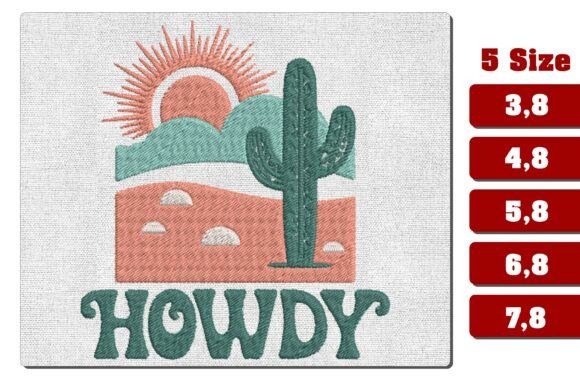
Howdy Desert Sunset Cactus Embroidery Review
As I prepare my booth inventory for the upcoming summer craft fair season, I am constantly evaluating which digital assets will translate best into physical sales. When reviewing the Howdy Desert Sunset Cactus Embroidery, my immediate assessment is that this design captures a specific, high-demand aesthetic: modern western meets cheerful summer nostalgia. It does not feel overly rustic or dated; instead, it strikes a balance between playful and polished. For an embroidery business owner or Etsy seller, this versatility is crucial. The "Howdy" text adds personality without being aggressive, while the sunset and cactus motifs provide enough visual interest to serve as a focal point on various blank products.
Evaluating Product Viability for Market Booths
When setting up a table display, customers are drawn to items they can immediately visualize in their own lives. This machine embroidery design performs exceptionally well across several key categories relevant to handmade markets. Based on the available sizes ranging from 3.8 inches to 7.8 inches, here is how I plan to utilize this design for maximum retail impact:
- Tote Bags and Market Shoppers: The 6.8-inch and 7.8-inch sizes are ideal for canvas tote bags. A large, colorful desert scene creates a "summer essential" vibe that shoppers look for at outdoor markets. The design has enough presence to be seen from a distance, drawing customers into the booth.
- Kitchen Textiles: Tea towel embroidery and apron embroidery are staples for my shop. The 4.8-inch and 5.8-inch sizes fit perfectly within the safe stitch area of standard flour sack towels without overwhelming the fabric. The friendly greeting makes these excellent giftable handmade items rather than just utilitarian kitchen tools.
- Wearable Accessories: Caps and denim jackets require careful sizing. The 3.8-inch version is perfect for left-chest placement on shirts or centered on unstructured caps. However, when applying this to curved surfaces, one must account for distortion, which I will discuss in the technical notes below.
- Patches and Pouches: For smaller add-on sales, the smallest size works beautifully as an embroidered patch or a zipper pouch accent. These lower-price-point items often encourage impulse buys when displayed near larger, more expensive pieces.
Production Practicality and Batch Efficiency
For commercial embroidery and small shop product creation, time is money. A design might look beautiful on screen, but if it requires constant thread changes or excessive trimming, it eats into profit margins. The Howdy Desert Sunset Cactus Embroidery appears optimized for production efficiency. The color blocking likely allows for logical thread sequencing, minimizing stops during batch runs. This is vital when producing ten tea towels or five aprons in a single hooping session.
From a photography standpoint, this design is a winner for online listings. The combination of warm sunset tones and green botanical elements photographs vibrantly against neutral linens and natural cottons. For Etsy sellers relying on digital thumbnails, high contrast and clear subject matter drive click-through rates. I recommend creating a printable mockup using the digital embroidery file before stitching out every variation. This allows you to test layout placements on different products virtually, ensuring your listing photos look professional and cohesive without wasting materials on failed experiments.
Technical Considerations and Careful Use Notes
While this design is versatile, experienced embroiderers know that execution matters as much as the art itself. Before listing any finished product for sale, consider these technical constraints regarding stitch density and fabric texture:
Fabric Texture and Stabilizer Selection
The intricate details in a sunset gradient or cactus spines can get lost on highly textured fabrics like terry cloth or waffle weave. If you are planning tea towel embroidery on thick material, use a water-soluble topping to keep the stitches crisp. Without it, the design may sink into the pile, making the "Howdy" text illegible and the sunset colors muddy. Always match your stabilizer weight to the design density; a lightweight tear-away may suffice for the 3.8-inch size on quilting cotton, but the 7.8-inch version on a heavy canvas tote will likely require a medium-weight cutaway for long-term durability.
Size Reduction Risks
Although the design comes in multiple sizes, be cautious about manually resizing the embroidery file beyond the provided dimensions. Shrinking the 3.8-inch version further could cause small lettering to become unreadable or dense fill areas to pucker the fabric. Conversely, enlarging the largest size without adjusting stitch counts could result in gaps or poor coverage. Stick to the manufacturer’s intended sizes to maintain the integrity of the handmade product quality.
Thread Contrast and Color Accuracy
Sunset designs rely heavily on color blending. Test your thread colors on scrap fabric first to ensure the transition from sky to horizon looks smooth. Dark fabrics can sometimes swallow lighter pastel threads, so you may need to adjust the underlay or choose brighter thread alternatives to maintain visibility. Remember that monitor colors rarely match thread colors exactly, so physical testing is non-negotiable for brand consistency.
Maximizing Value and Customer Engagement
Ultimately, the goal of adding Howdy Desert Sunset Cactus Embroidery to your catalog is to increase perceived value. Customers at craft fairs are looking for unique, artisanal quality that mass-produced goods cannot replicate. By showcasing this design on premium blanks—such as organic cotton aprons or heavyweight linen pillows—you elevate the entire product line. The design acts as a conversation starter, allowing you to engage buyers about the inspiration behind the art and the craftsmanship involved.
For digital sellers offering the file itself, emphasize the multi-size inclusion in your listing description. Crafters appreciate knowing they have options for different hoop sizes without needing to purchase separate files. Highlighting the commercial usability (if licensed) also attracts other boutique makers looking for reliable, tested designs for their own summer collections.
Final Designer Checklist Before Selling
Before you hoop your first production piece or list this item in your shop, run through this essential checklist to ensure professional results:
- Verify Licensing: Confirm whether your purchase includes rights for selling finished products or if it is limited to personal use. Never assume commercial embroidery rights are included.
- Test Stitch-Out: Always stitch a sample on the exact fabric you intend to sell. Check for registration issues, puckering, or thread breaks.
- Check Hoop Compatibility: Ensure your machine’s hoop size accommodates the 7.8-inch version with adequate margin for stabilization. Do not force a design into a hoop that is too tight.
- Review Spacing: On items like aprons, measure twice to ensure the design sits at the correct height relative to pockets or waist ties.
- Create Real Samples: While printable mockups are great for listings, having at least one physical sample at your craft fair booth helps customers trust the texture and quality of the stitch work.
By approaching Howdy Desert Sunset Cactus Embroidery with both creative enthusiasm and technical discipline, you transform a simple digital file into a profitable, eye-catching asset for your handmade business. Whether you are stocking shelves for a weekend market or updating your online store for the summer rush, this design offers the charm and practicality needed to succeed in today's competitive maker economy.